Hiya Multivitamin for Kids and the Nutrition Gaps That Keep Parents Up at Night

When your child survives on the same handful of foods, nutritional worries can quickly take over. Discover which gaps Hiya may help address and what needs closer attention.
All featured products are selected by our editors and may include affiliate links. If you purchase through these links, we may earn a commission.
One day, your child happily eats everything on their plate. The next, vegetables become unacceptable, dinner turns into an argument, and three familiar foods seem to be the entire menu. Naturally, you begin wondering what nutrients they might be missing.
Hiya kids’ multivitamins are a nutritional support for children with less varied diets. But understanding what it provides, what it leaves out and when professional advice matters can help you make better decisions about your child’s nutrition.
When Every Meal Becomes a Battle Over the Same Few Foods
An ordinary dinner can turn into a tiring negotiation if you’re a fussy eater. Some kids won’t eat vegetables at all, others avoid meat or dairy or foods with unfamiliar textures. Even their favorite food can suddenly become intolerable.
One parent in a Reddit discussion said their toddler suddenly refused to eat vegetables and meat, although they used to eat almost everything. They’d added a multivitamin, but still wanted their child to get nutrients through normal meals.
These are understandable concerns, particularly as the limited food choices continue for months. It is common in childhood to refuse food on occasions, and this does not mean that the child is nutritionally deficient.
Looking at what children eat over a week is more useful than judging individual meals, says the NHS. A child who eats little at dinner can still receive helpful nutrients from breakfast, snacks and other foods.
How to Recognize When Picky Eating Could Affect Nutrition
It is not how many foods a child accepts that matters, but the total nutrients supplied by the foods. A child who won’t eat broccoli but will eat other vegetables, fruits and sources of protein may still have a reasonably balanced diet.
Problems are more common when whole food groups are removed from their diet. Persistent avoidance of dairy, protein-rich foods or fortified alternatives should be further investigated, especially if associated with changes in growth or energy levels.
A good place to start is to keep a food record for seven days. Write down everything your child eats, including snacks, drinks and portion sizes. Look for patterns of nutritional deficiency rather than single foods being refused.
Also think about changes in appetite, unusual fatigue, persistent constipation or difficulty maintaining expected growth. These observations can help a pediatrician decide if dietary changes, further assessment, or blood tests are needed.
What Hiya Multivitamins Actually Provide
Hiya Health formulates its daily chewable for children aged 2 to 12, combining more than 15 vitamins and minerals with a blend of 12 fruits and vegetables. Each tablet contains zero added sugar and uses monk fruit extract and mannitol for sweetness. The formula is also gluten-free, dairy-free, and free from artificial dyes.
Unlike many gummy supplements, Hiya multivitamins come as chewable tablets. The company also reports third-party testing for contaminants and Clean Label Project certification, although these quality measures cannot establish whether an individual child needs supplementation.
Essential Nutrients That Support Normal Growth and Development
Several nutrients in the formula play important roles during childhood.
- Vitamin D: Supports calcium absorption and normal bone development.
- Vitamin A: Contributes to healthy vision and normal immune function.
- Vitamin C: Supports collagen formation and helps the body absorb iron from plant foods.
- B Vitamins: Help the body release energy from food and support normal cellular functions.
- Zinc: Supports growth, wound healing, and immune function.
- Iodine: Helps maintain normal thyroid function, which is important for growth and development.
These nutrients may help supplement dietary intake when a child’s food choices are limited. But nutritional benefits vary according to current intake, age and individual needs.
Nutritional Gaps That One Chewable Cannot Address
An important detail often overlooked is that the daily Hiya formula contains no iron. Children who consistently avoid meat, legumes, and fortified cereals may therefore need their iron intake evaluated separately.
Calcium is also worth a look. Each chewable contains only 25 mg, or about 2% of the labeled daily value for children four years and older.
The included fruit and vegetable blend weighs 25 mg in total. Although it contributes plant-derived ingredients, this small quantity cannot replace the fibre, water, and nutritional value of actual produce.
These distinctions matter when selecting even the best children's multivitamins. A supplement may provide several useful micronutrients while leaving other dietary requirements largely untouched.
How to Make Daily Vitamins for Kids Part of a Realistic Routine
Supplements are more likely to be consistent when they are part of an established activity rather than another daily negotiation. Hiya Health advises one chewable tablet daily, preferably at breakfast, but the instructions state that it can be given with or without food.
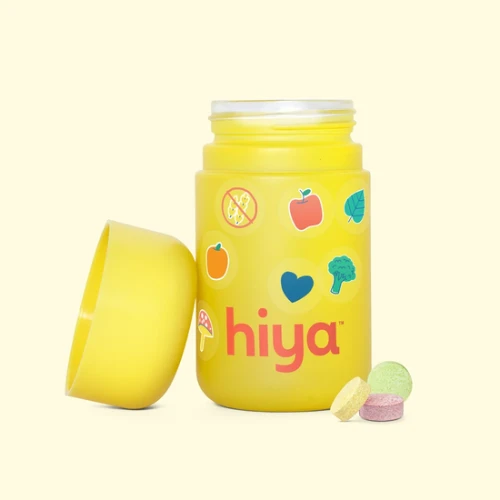
The product includes a reusable glass bottle, decorative stickers, and monthly refill packs. The routine can be made more fun if children are able to personalize their bottle, but an adult still needs to be responsible for storing and dispensing the tablets.
Taste can still be a barrier. Hiya comes in cherry, strawberry, tropical and green apple flavors, but children with strong sensory preferences may reject unfamiliar textures, whatever the flavor. Meanwhile, continue introducing ordinary foods without pressure. The CDC explains that children may need eight to ten exposures before accepting something unfamiliar. Offering tiny portions alongside favourite foods can make experimentation less intimidating.
A good strategy is to decouple two goals: keep your nutrient intake in a good place, and gradually increase the variety of food. A supplement can be added as appropriate to the former. The latter can be dealt with by repeated relaxed food experiences.
When a Pediatrician Should Check for Nutritional Deficiencies
According to the American Academy of Pediatrics, routine multivitamin supplementation isn't necessary for most healthy children who eat a variety of foods in a well-rounded diet. However, children on highly restrictive diets, with diagnosed deficiencies or conditions that affect nutrient absorption, may benefit from individualized guidance.
Seek medical advice if your child experiences poor growth, persistent fatigue, swallowing difficulties, or increasingly restricted eating. A pediatrician can review dietary intake and decide whether testing is appropriate. Don’t add more iron just because a child won’t eat meat. Too much iron can be harmful, so it’s best to get professional advice before supplementing.
FAQs
Is Hiya Multivitamin for Kids Suitable for Picky Eaters?
It can help supplement certain vitamins and minerals when food variety is limited. However, it can not replace adequate calories, protein, fiber, or a well-rounded diet. Supplementation may be indicated as determined by a pediatrician.
Does Hiya Kids Multivitamin Contain Iron?
No. The standard daily multivitamin does not include iron. Hiya Health sells an iron supplement separately, but children should only receive additional iron when medically appropriate.
Can Children Take Hiya Every Day?
The manufacturer recommends one chewable daily for children two years and older. Parents should consult the pediatrician to ensure they are appropriate and not to mix supplements that could lead to excess of some nutrients.
How Long Does It Take for Multivitamins to Work?
There is no universal timeline. Correcting a confirmed deficiency depends on the nutrient, its severity, and treatment. Children without deficiencies may experience no noticeable changes.
It can be concerning when a child has a limited diet, but the most helpful response begins with understanding what they actually consume. Hiya Health could help fill in some of the micronutrient gaps when supplementation is appropriate.
Identifying missing nutrients, monitoring growth, and gradually improving food variety remain more valuable than relying on a chewable alone.
Follow EliteCart for more practical insights into children's health and nutrition.